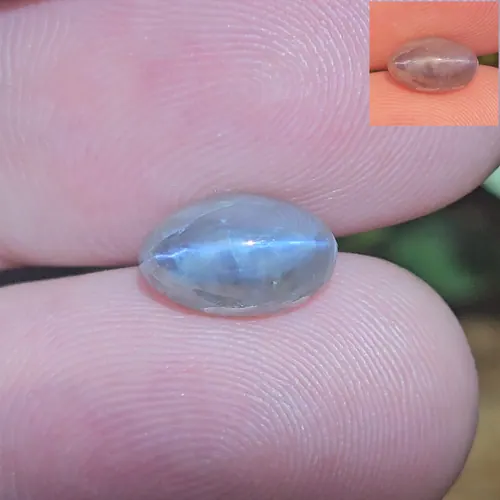
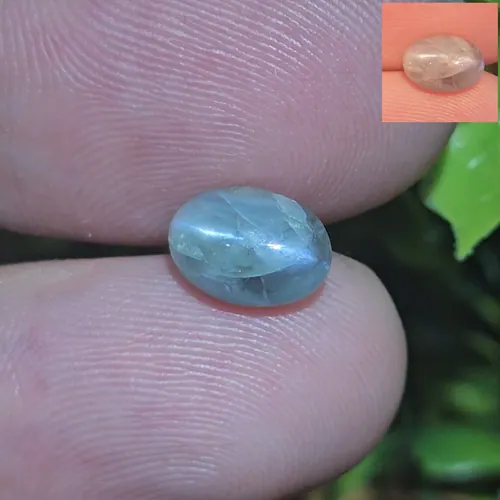
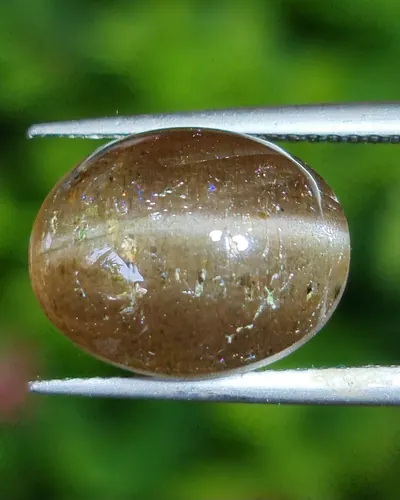
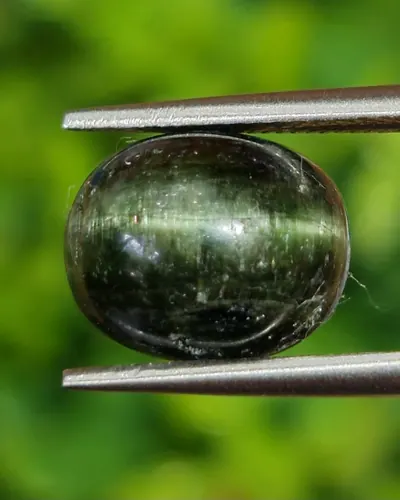
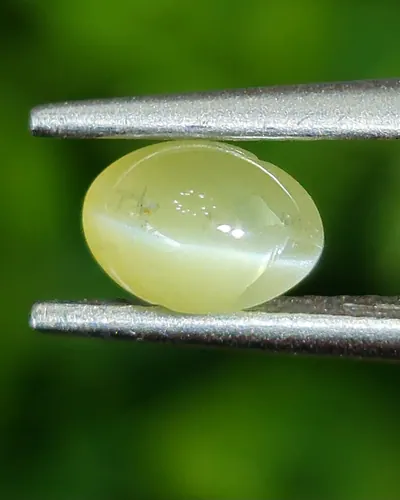
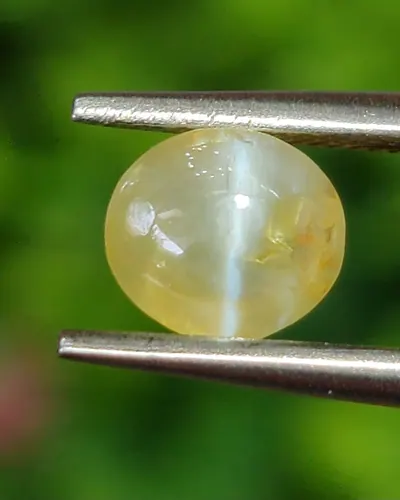
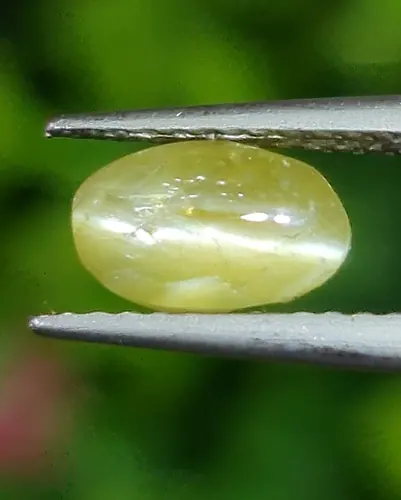
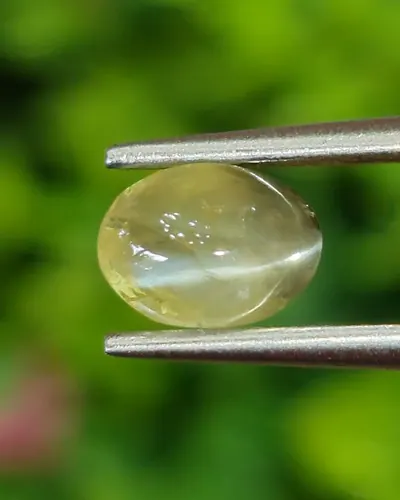
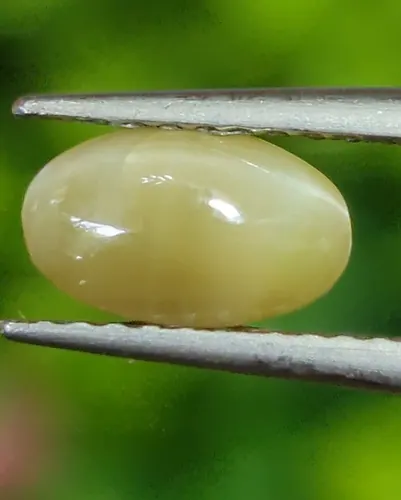
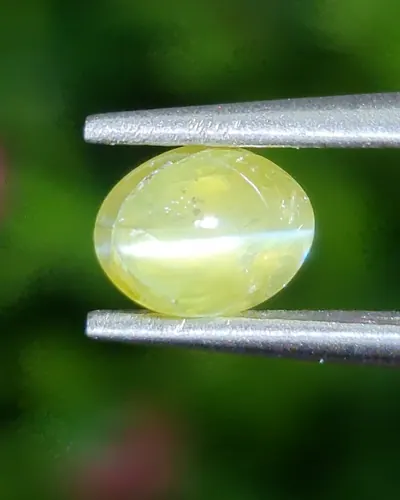
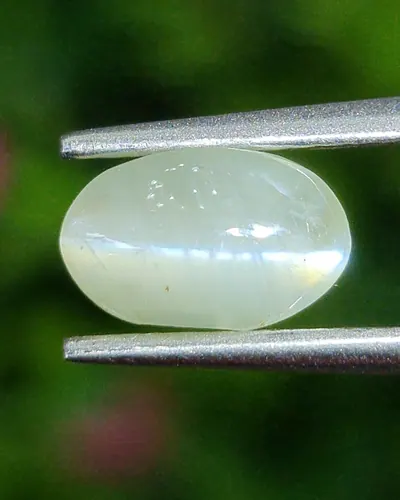
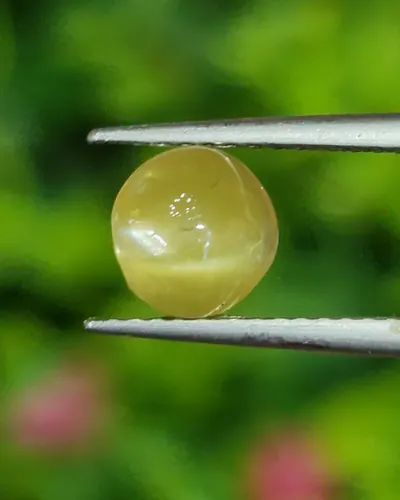
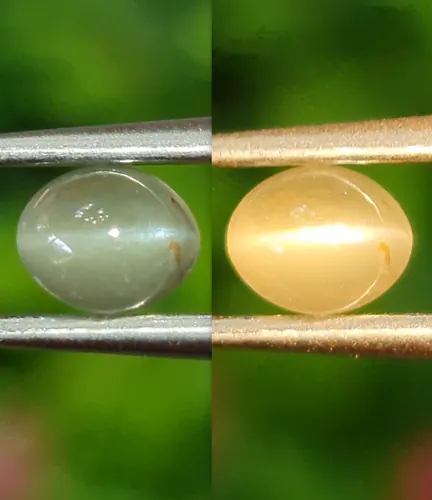
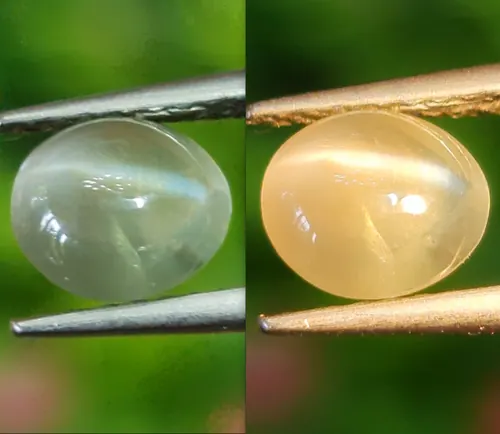
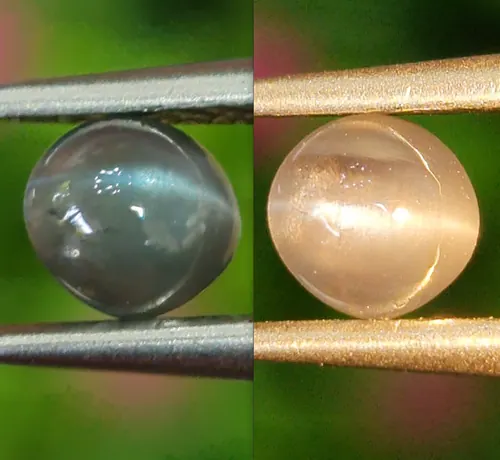
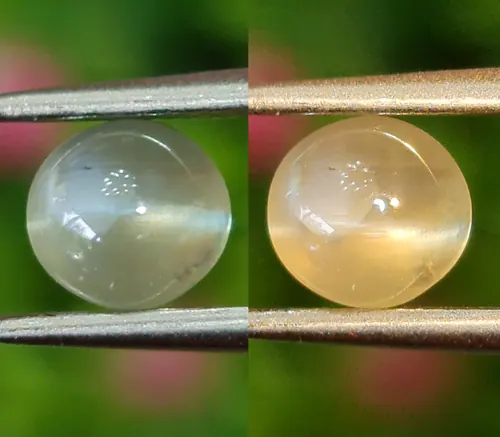
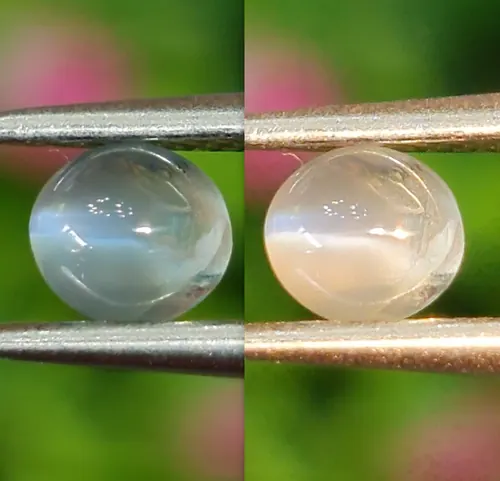
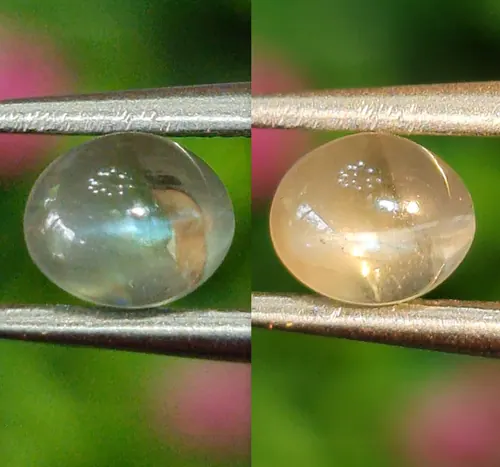
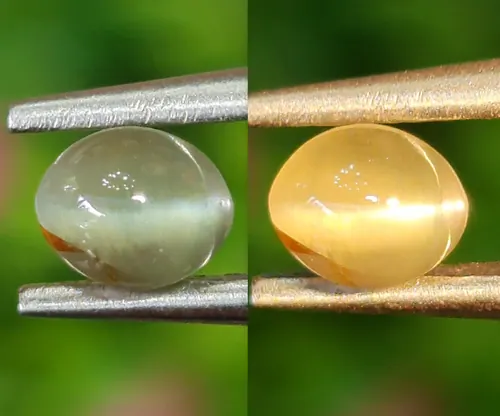
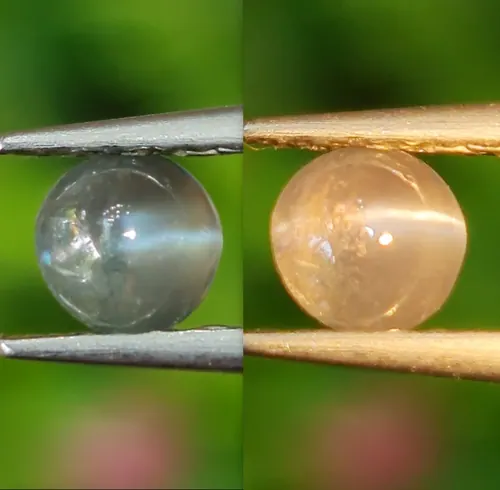
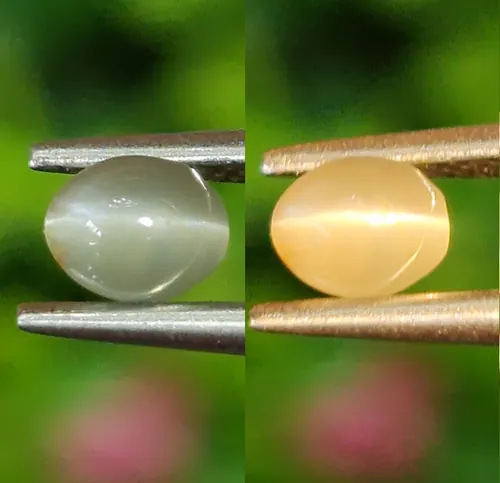
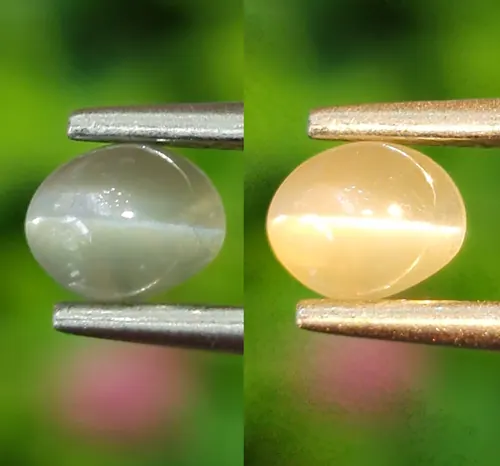
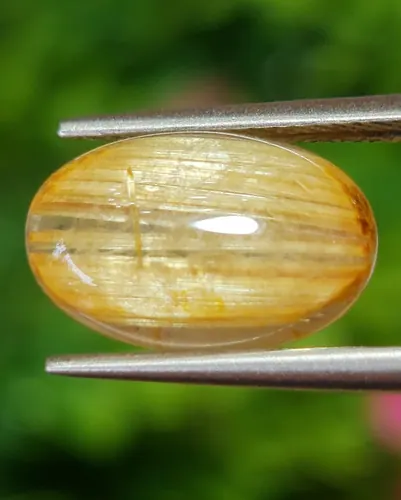
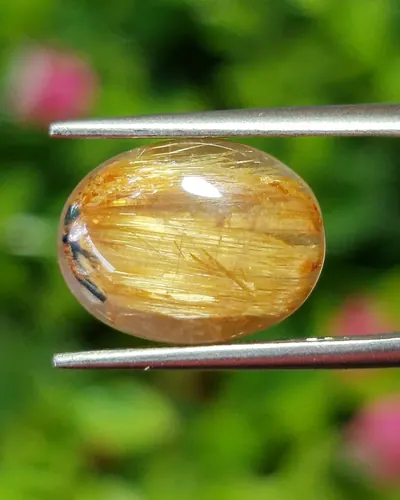
Distinctive Line of Light and Chatoyancy Cat’s-eye chrysoberyl is a chrysoberyl variety that displays a sharp, bright ray of light gliding across its surface. This line shifts position relative to the viewing angle and the movement of the light source, an optical phenomenon known as chatoyancy or the cat’s-eye effect. This effect is most prominently displayed when the gem is cut into a cabochon.
Beauty Born from Internal Structure The cat’s-eye band is caused by light reflecting off parallel internal inclusions, such as microscopic fibers, mineral needles, or hollow channels embedded within the crystal matrix. Lapidaries orient the rough gemstone specifically relative to these parallel inclusions so that the light band rests directly near the center of the dome and glides smoothly across the surface as the angle changes.
While the term "cat’s eye" describes an optical phenomenon observed in various gem species—such as quartz, tourmaline, and apatite—the standalone trade designation Cat’s Eye without a mineral prefix specifically refers to cat’s-eye chrysoberyl. In Thai tradition, the historical name Phaithoon (ไพฑูรย์) has long been used to designate this gemstone.
The moving line of light across the surface of cat’s-eye chrysoberyl originates from microscopic internal structures and reveals its prominent beauty when fashioned into a cabochon cut.
Read the gemstone guide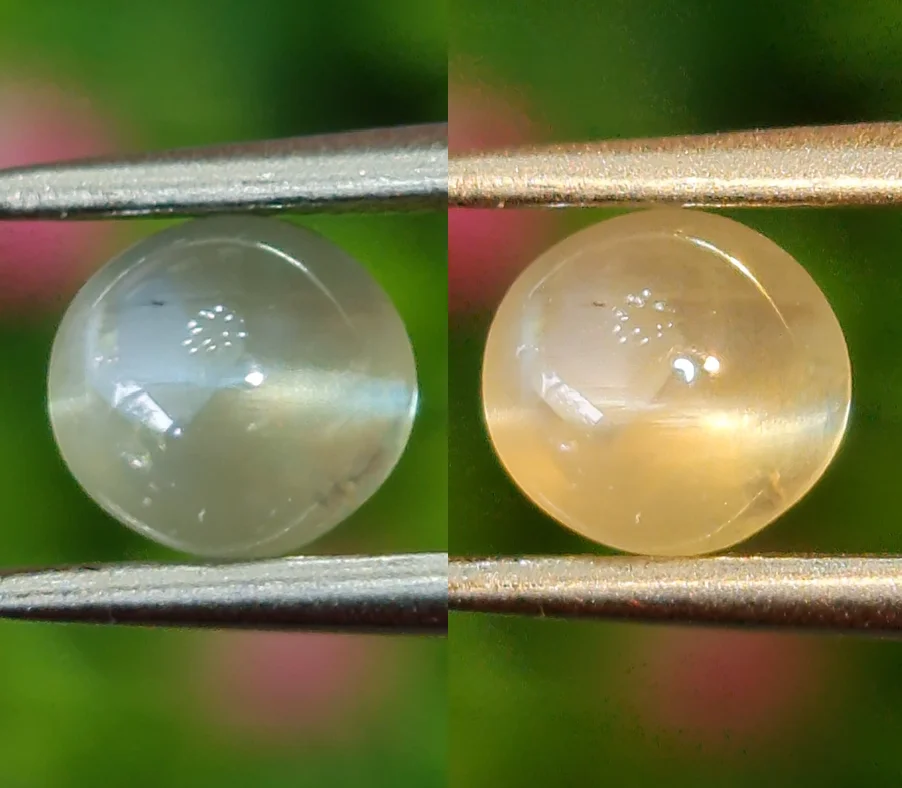
This list stays in your own browser. We only see it if you send it.